
Installing Subsurface Drip Irrigation (SDI) involves more than placing drip tape in the soil. It requires planning, coordination, and a steady flow of materials and equipment working together in the field.
This article is part of our SDI Install Series, where we walk through the full process of installing an SDI system—from the first pass preparing the soil to the final system checks and grower training.
In the first article, we covered pre-ripping, the step that prepares the soil ahead of installation. Once the ground is ready, the next phase begins: getting the drip tape to the field and installing it underground.
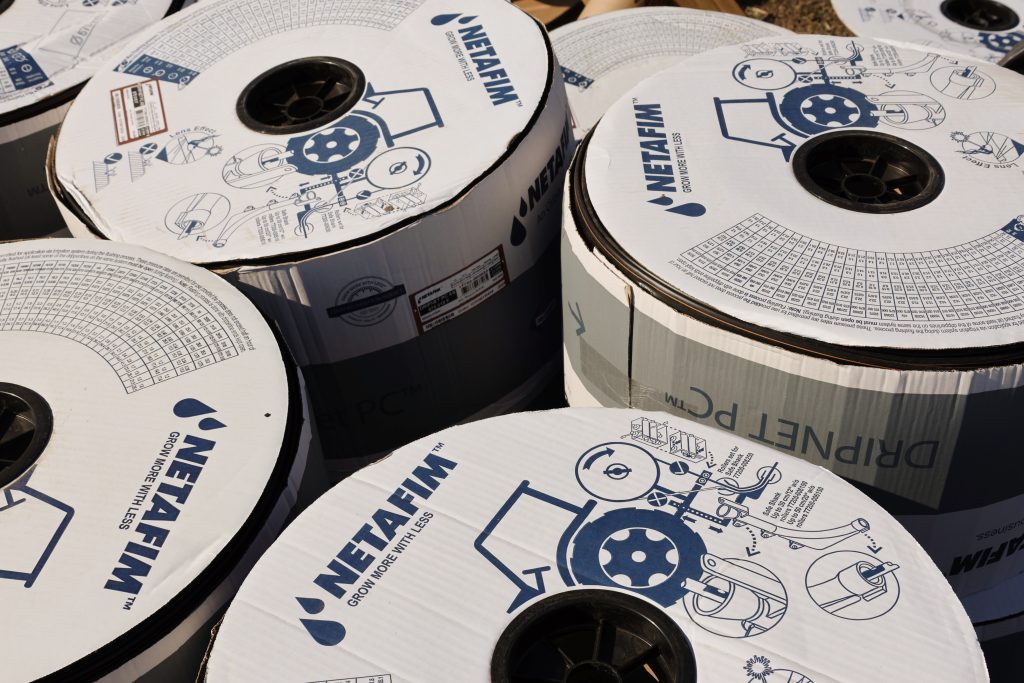
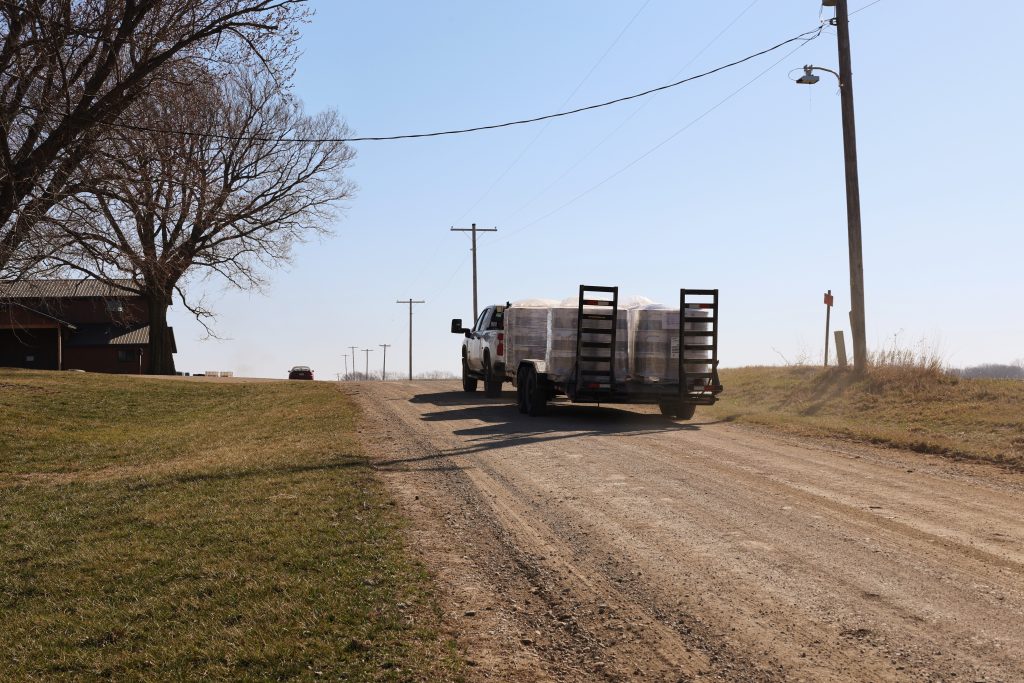
Hauling Tape to the Field
Before installation begins, drip tape must first arrive at the job site.
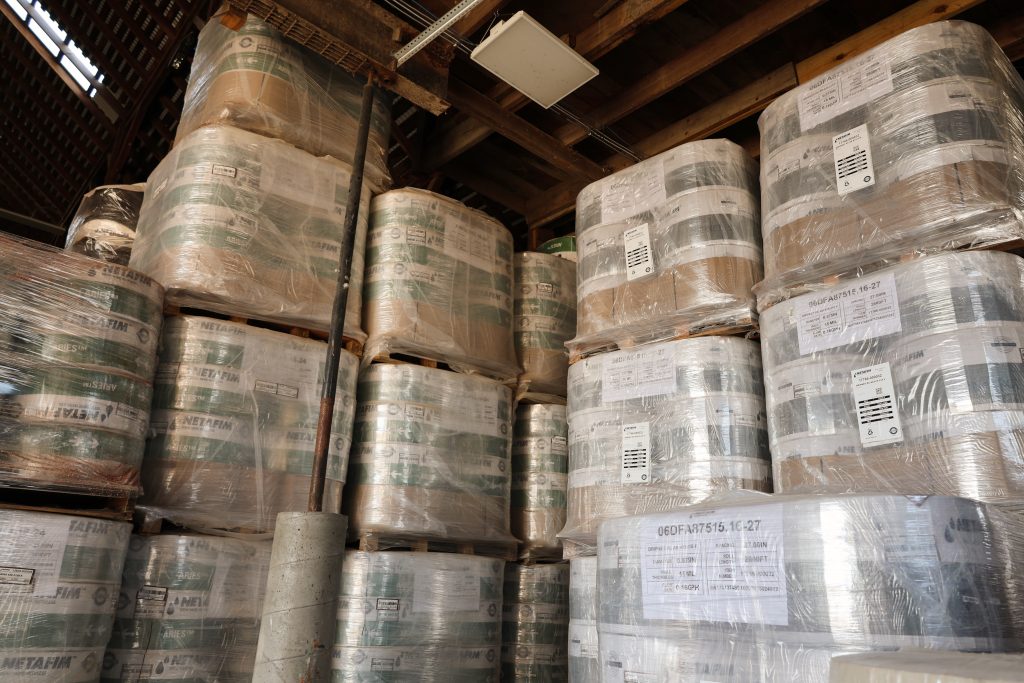
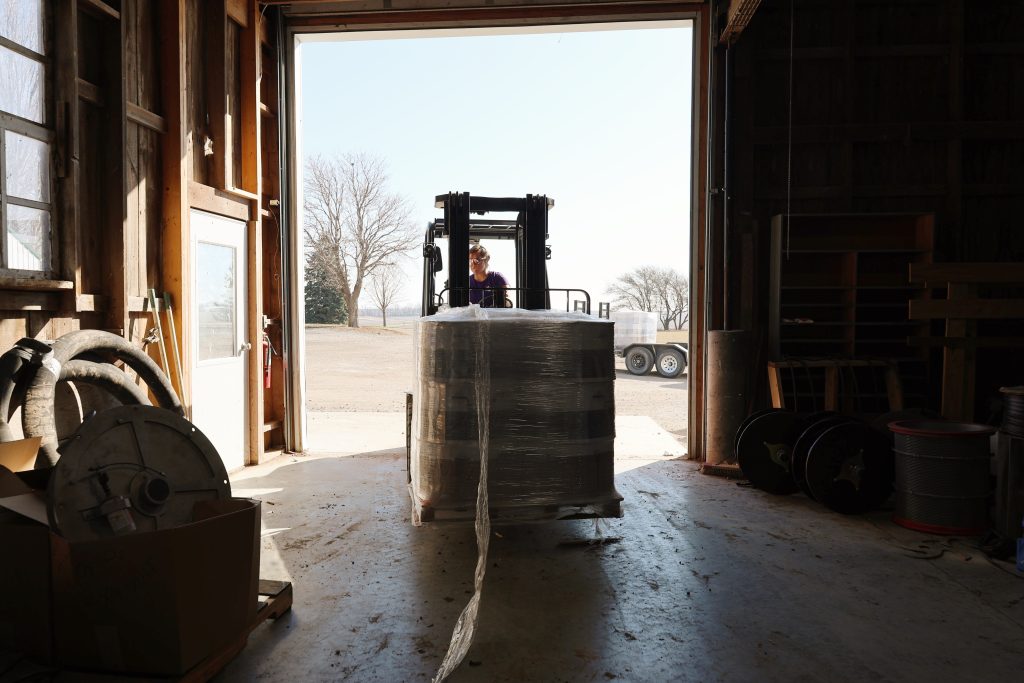
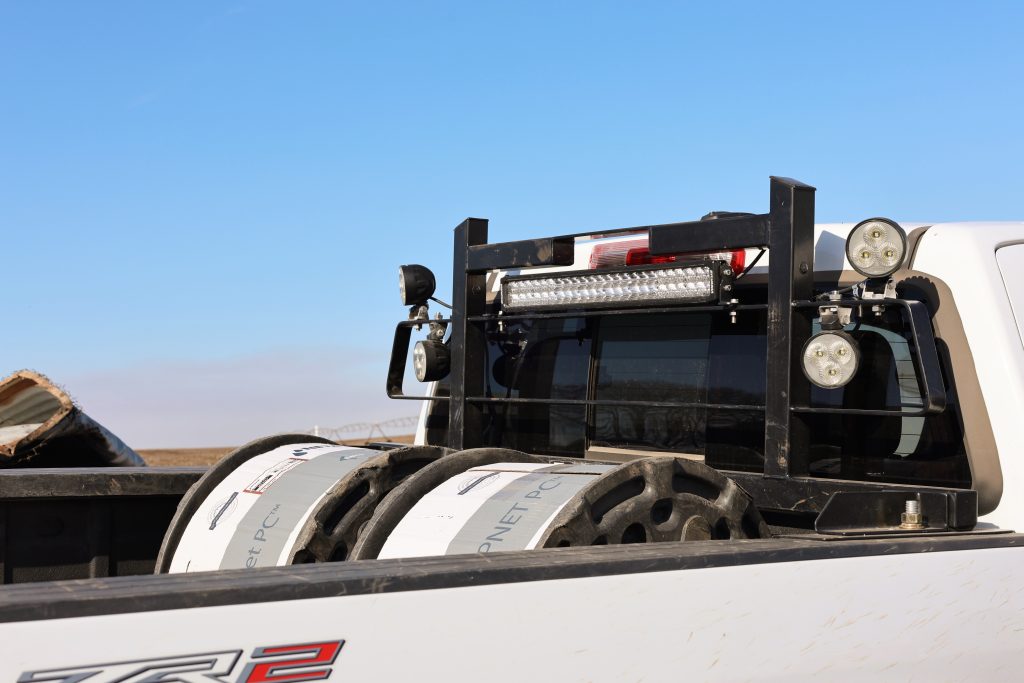
Depending on the project, tape may be drop-shipped directly to the field or stored nearby and hauled out as the installation progresses. For local installs close to Hiawatha, KS, tape is stored in a nearby shed and transported to the field as needed.
Moving tape to the field is the first logistical step in keeping the installation running smoothly. If the plow runs out of tape, the entire process stops. That’s why keeping materials available and accessible is essential.
Tape Staging in the Field
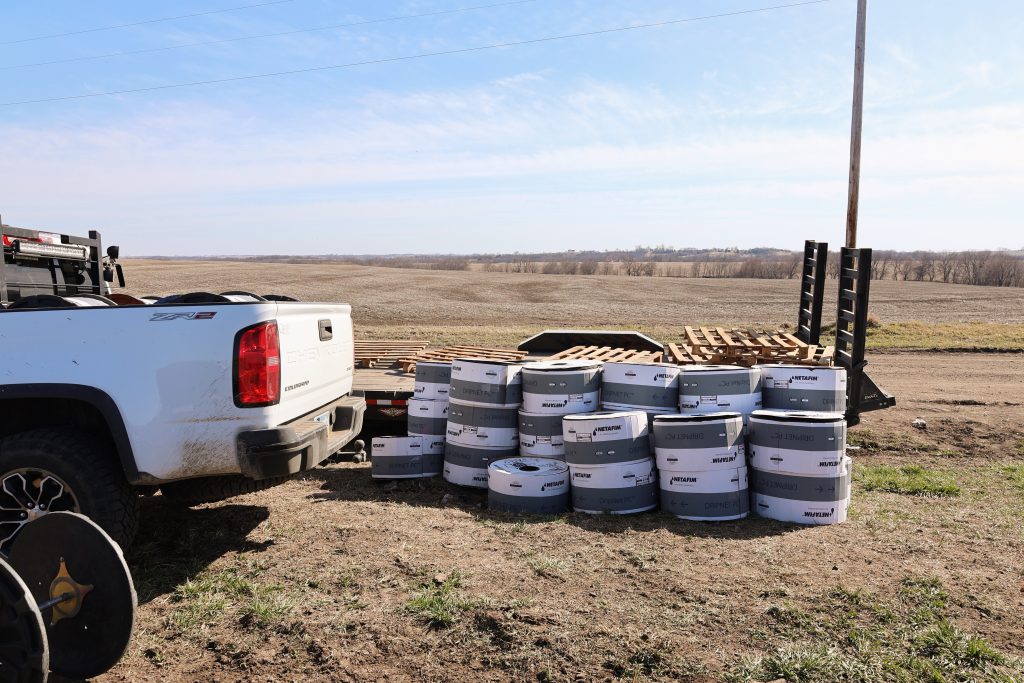
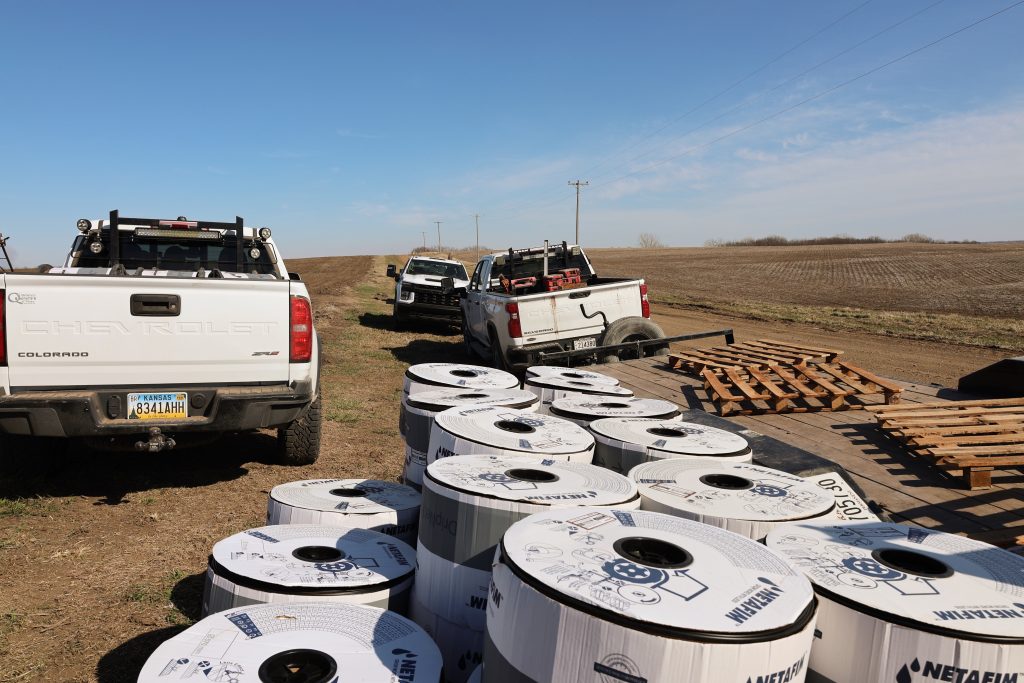
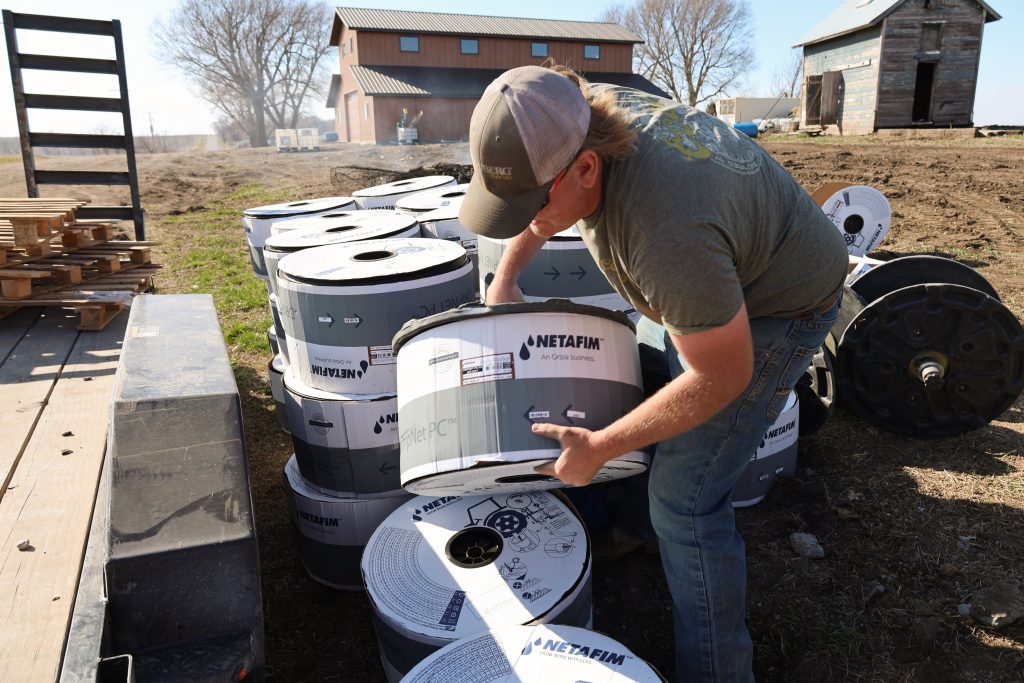
Once tape arrives at the field, it’s organized in a central staging area.
This area serves as the hub of the installation operation. Fresh pallets of tape are placed where they can be easily accessed, allowing crews to quickly load the trucks that deliver tape to the plow.
The staging area also becomes the place where empty spools and wrapping materials are brought back and managed. Keeping materials organized and the work zone clean helps the crew stay efficient and focused.
A well-managed staging area means no searching for materials, no unnecessary delays—just a steady flow of tape heading out to the field.
Plowing the Drip Tape
With tape staged and ready, the installation can begin.
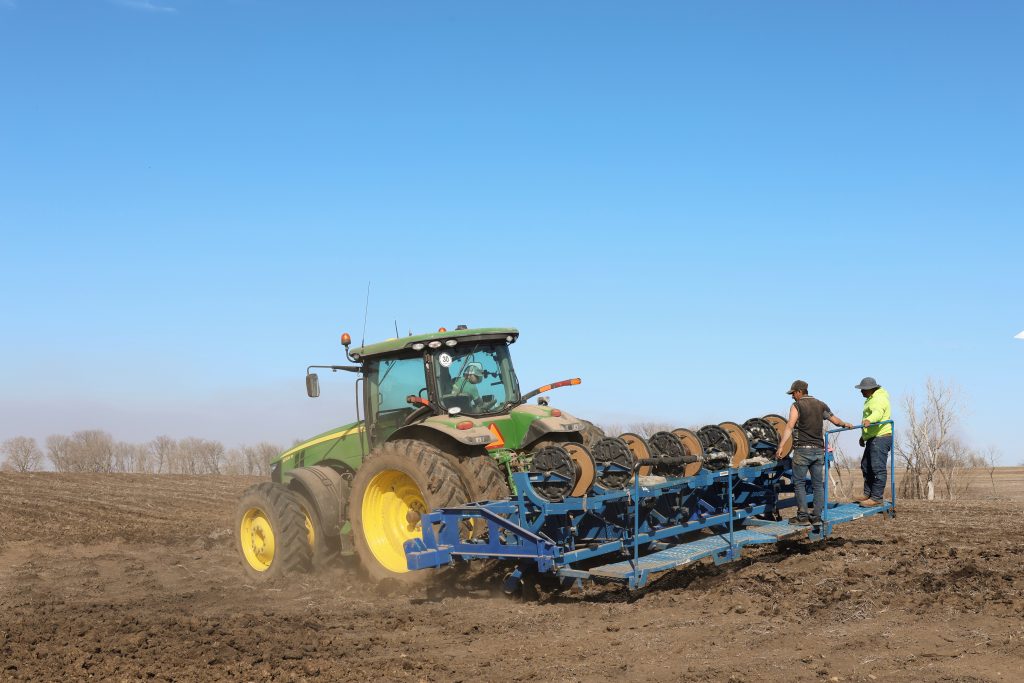
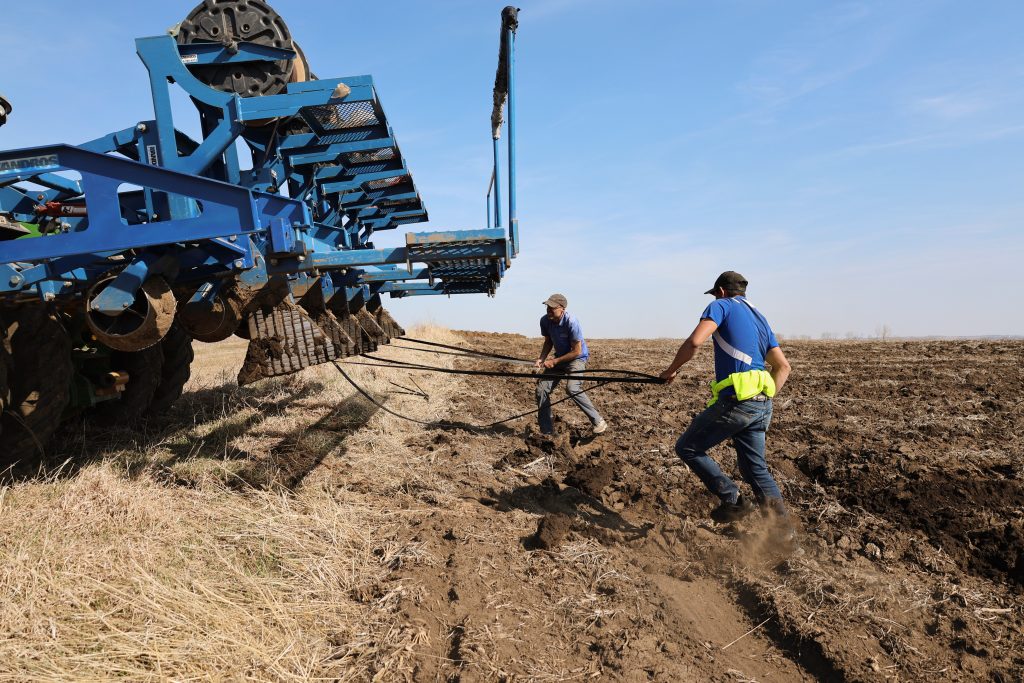
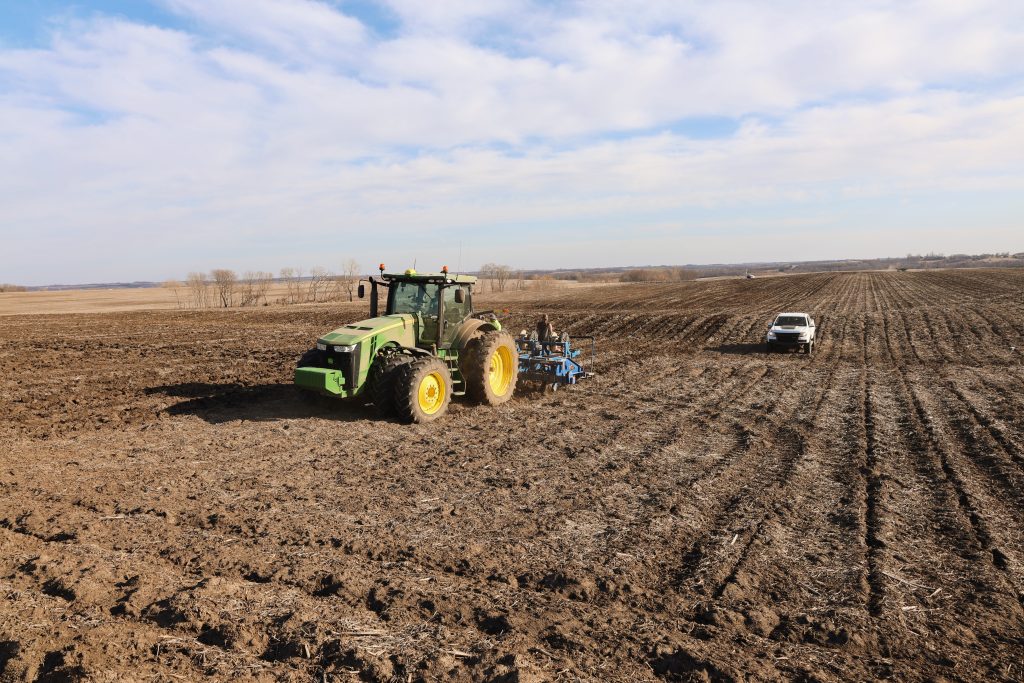
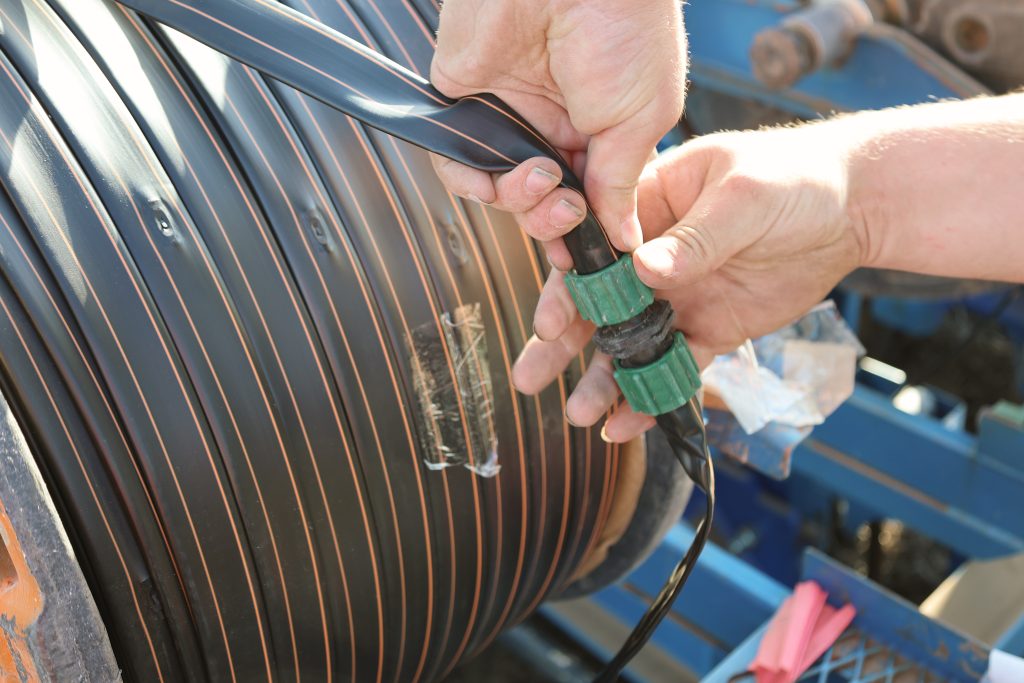
The SDI plow opens a narrow trench, feeds the Netafim drip tape into the soil, and covers up the trench behind it in one smooth pass. The goal is to place the tape precisely at the correct depth so water can later move evenly through the crop’s root zone.
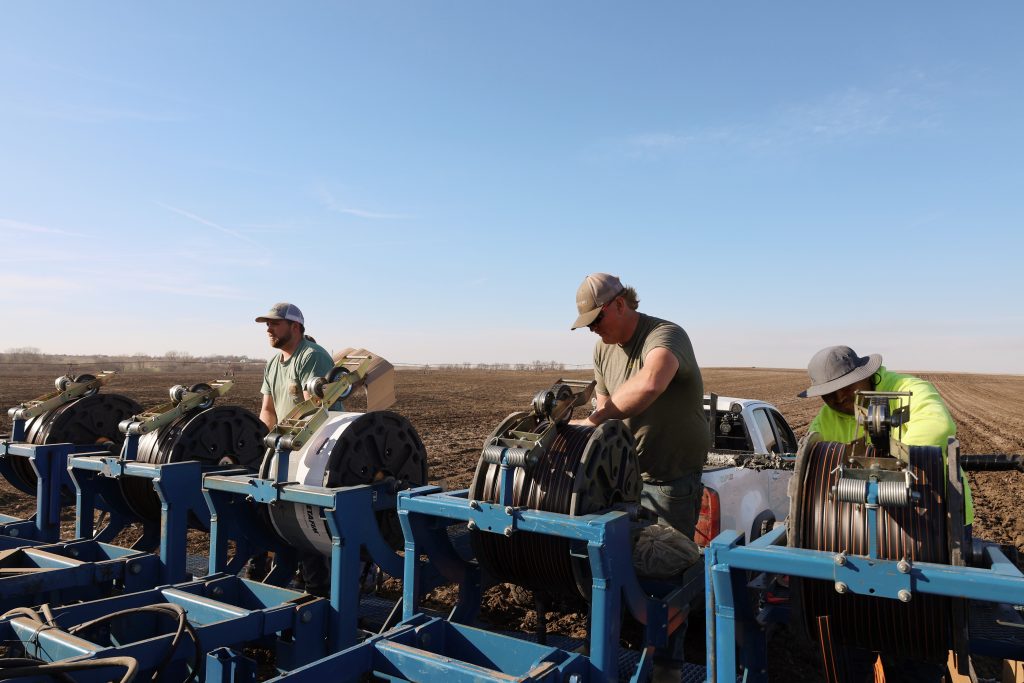
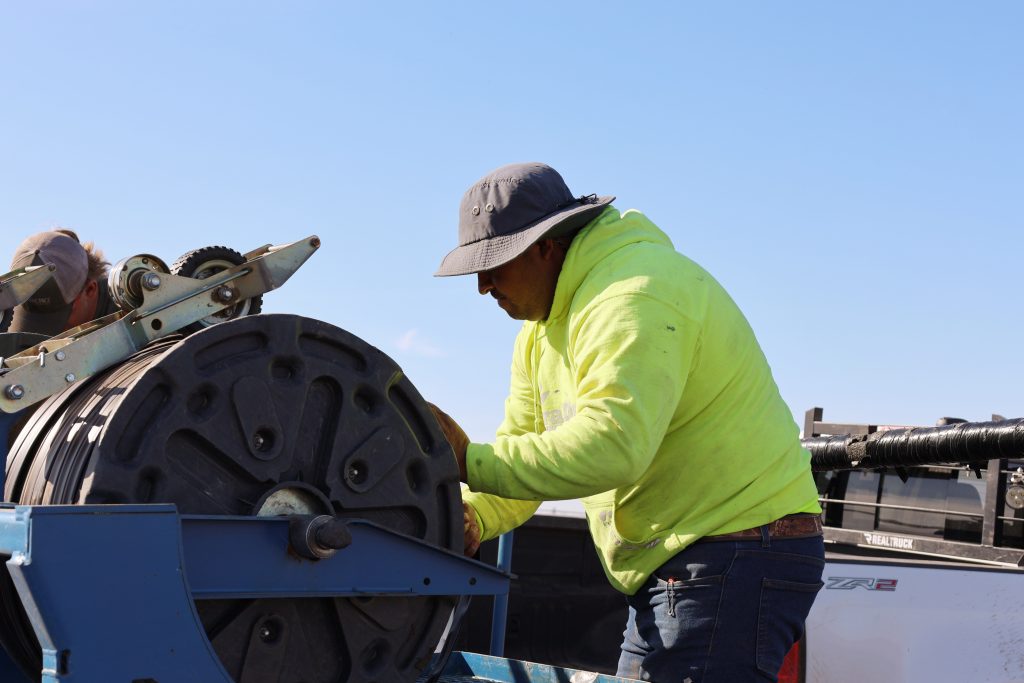
Crew members typically ride on the back of the plow to monitor the process. They watch tape tension, check the installation depth, and make sure the tape feeds properly from the reels.
Once the plow starts rolling, rows of drip tape begin to take shape across the field.
Keeping the Plow Supplied
While the plow installs tape underground, another operation is happening above ground.
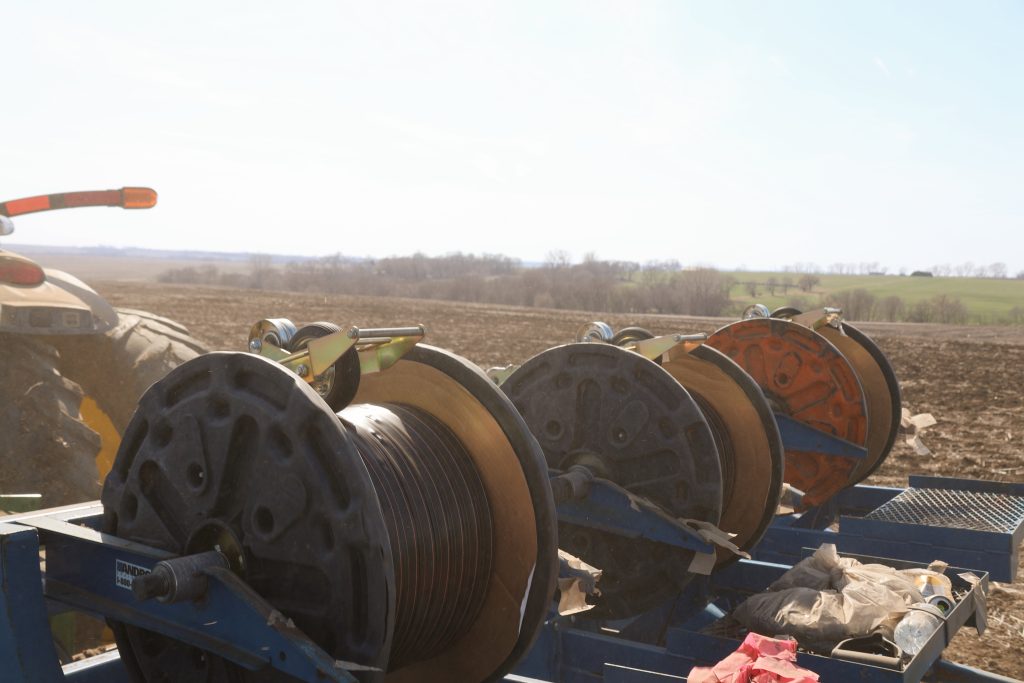
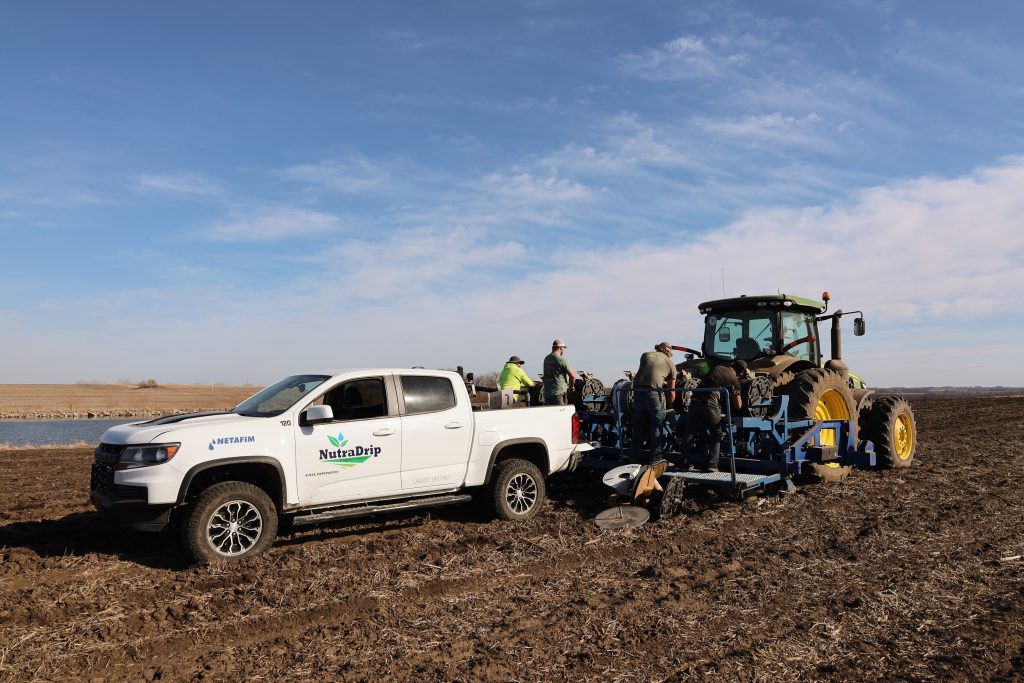
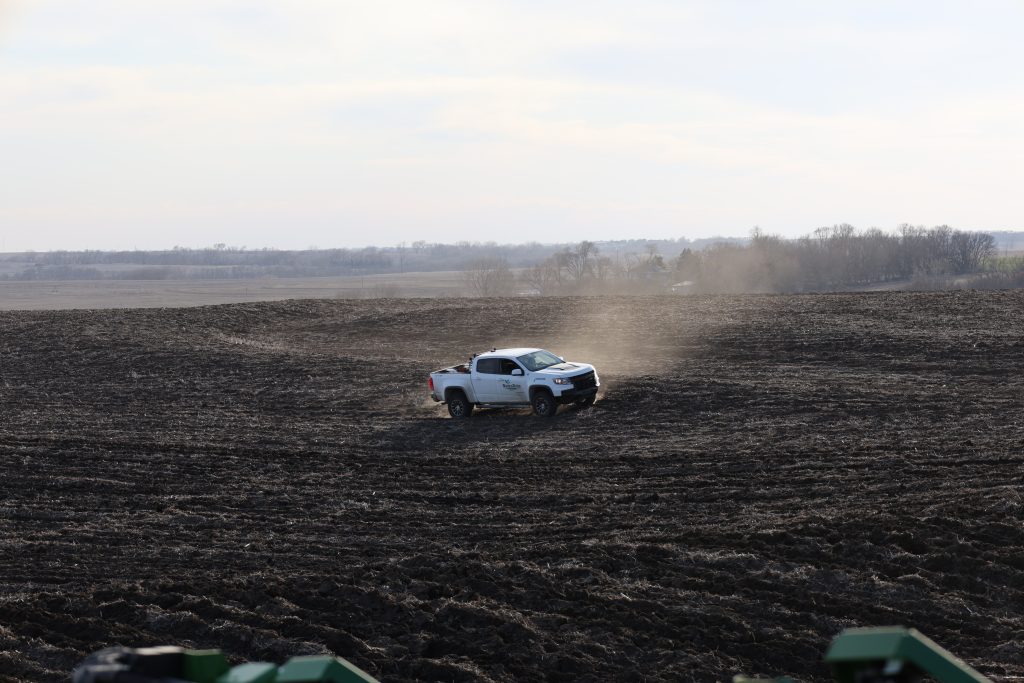
Tape trucks continuously run spools from the staging area out to the plow. These trucks keep the plow supplied with fresh reels as the tape runs out during installation.
When the plow needs a refill, the crew quickly swaps out the empty reels and loads new ones so the installation can continue without losing momentum.
This constant cycle of loading tape, delivering spools, and refilling the plow keeps the installation moving efficiently across the field.
Coordination in the Field
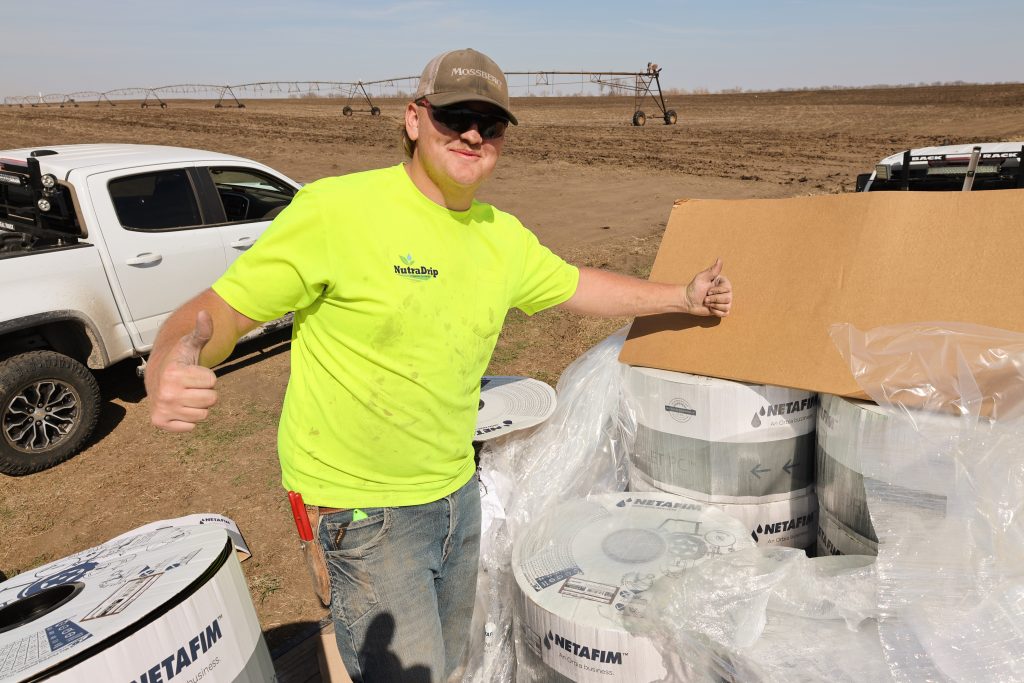
Installing drip tape across a field requires teamwork. Operators, plow crew members, and tape truck drivers all work together to keep the process running smoothly.
When the system is working well, tape flows steadily, the plow keeps moving, and hundreds of rows of drip line are installed efficiently.
The Next Step in the Install Process
Once the drip tape is installed, the focus shifts to protecting the tape and building the infrastructure that will deliver water across the field.
In the next article in our SDI Install Series, we’ll walk through wheel packing the soil, delivering the mainline and submain pipes, and trenching the lines that will carry water from the pump to each zone of the system.
These steps form the backbone of the irrigation network that powers the system underground.